A Lil' Disorder Creates Greater Resiliency
A study predicts the orderly lattice of the US electrical grid is inherently unstable, while random networks degrade slowly. A little disorder, meaning leeway for school leaders, may help.
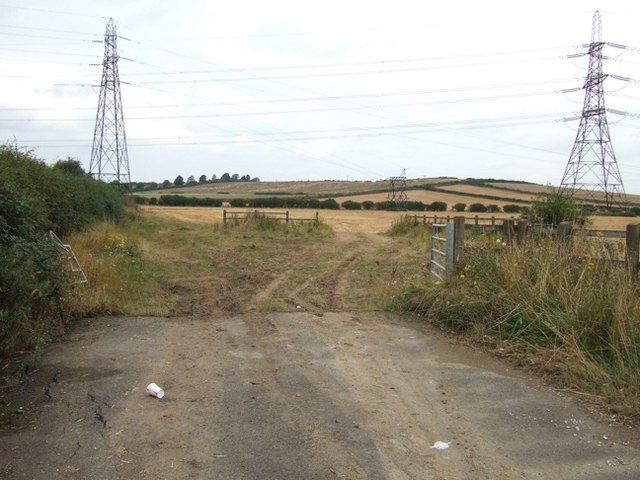
On Sunday, I riffed off the law of entropy to arrive at a useful (I think) formulation: allow for some randomness and disorder within a school by giving a school leader the leeway to run it as he or she deems fit (randomness + disorder meaning here not students running around screaming, but rather that the school operates largely independently).
While that formulation doesn't have much to actually do with the scientific concept of entropy (I don't think I'll be getting the Nobel Prize in physics any time soon), I found some further scientific evidence that we can draw in to my hypothetical web.
As reported on Scientific American, a study of spatial networks predicts that the US electrical grid is inherently unstable. The reason for this, according to the researchers, is that "the connections of orderly lattice structures have more critical nodes, which increase the instability. The problem is that such orderly networks are always operating near an indefinable edge" (bold added).
They are structured and orderly, as in our hypothetical school that has an externally imposed order from the state or district, yet this very order makes it more fragile and suspect to "black swans"—or, unforeseen rare events that have tremendous impact.*
This idea of an "indefinable edge" has a correlation in the physical world. In gardens or farms, orderly monocultures with no surrounding nor internal hedges, trees, ponds, or other forms of cultivated "wilderness"—without well defined "edges"—are in great danger of disruption by bugs, fungi, fire, deer, wind, and any other form of devastation you can think of. They thus must rely on barrages of fertilizer, insecticide, and herbicide. By defining edges, and thereby allowing for some randomness or disorder, you can create habitat for birds and beneficial insects that can prey on harmful species, as well as buffer your crops from winds and other disturbances. Creating greater opportunities for edges builds resiliency and biodiversity.
In the case of networks such as electrical grids, the researchers "found that randomly structured networks—such as social networks—degrade slowly as nodes are removed, which in the real world might mean there is time to diagnose and address a problem before a system collapses."
So allowing for a greater degree of randomness within schools by relinquishing top-down control and enabling their leaders can make for more resilient schools.
- By the way, if you read the SciAm article, you'll note a general skepticism for any major failures of the electrical grid actually occurring. I'd suggest to the skeptics that they look more into the idea of "black swans."