Future Building
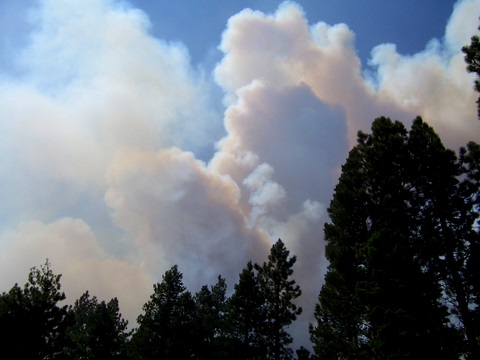
In a post a little while ago, I attempted to introduce the concept of living life with the awareness of the potential of natural (and unnatural) destruction to your home and possessions. But I think this idea is necessarily vague, because exactly how, one would ask, are we supposed to stop living in homes? Should we live in mobile homes, or large communal spaces that we all own?
I think the problem is something else, that I was attempting to work towards, and sensing the pulse, but not digging deep enough. I'm thinking now that the problem is the whole structure of our society; everything from the way we make our money to the way we organize our communities. Again, this is vague, but let's just stop and consider for a minute where current events like global warming, pollution of groundwater and oceans, peak oil, and depletion of topsoils is leading us. These dire symptoms of the dessication of the biosphere are the direct result of the way we live our lives right now. They are the direct result of the products that we manufacture, the food that we eat, and the lifestyles that we have grown to think are our birthright.
So to bring this back to something down to earth---when a natural disaster occurs, as I had said before, what we should be learning is not just how glad we are to have it be over with and to have survived---what we should be learning is just how disconnected we are from some of the most fundamental and basic of natural cycles. And these cycles are what we need to be mimicking and learning from in order to progress.
I am reading a book right now, called The Ecology of Commerce, by Paul Hawken (which I fully recommend if you're interested in either economics or ecology at all), that elucidates these points very clearly in terms of business and the need for a new 'restorative' economy. The focal point of the book is to try to wake businessmen up to the fact that the economy must be altered to accommodate human beings and the earth. One point of Hawken's vision is the need to recycle products nearly endlessly, as nature does, thus conserving resources, eliminating toxic waste, and building a sustainable economy that will produce fulfilling jobs.
What is insightful about Hawken's book is that while we are all, understandably, pointing fingers at McDonald's and Halliburton and Walmart, what we are failing to do is to begin considering, positively, how these corporations can be changed, and what kind of economic environment could be created that would reflect this change (which Hawken's book addresses). What we are doing is pointing our fingers at symptoms of the structure that is failing, and labeling what is causing the world to fall apart as evil. Instead, we should be focusing our energies on what way the structure can be re-created sustainably and in tune with the lessons of nature. Almost everyone, other than the dinosaurs and rich idiots that have their heads stuck in the sand, recognize that there are problems. Now it's time to start conceptualizing in what way these problems can be solved, and laying down the blueprints.
To bring this back to my immediate environment, right now the citizens of Lake Tahoe are pointing their fingers at the TRPA, the regional planning agency, which attempts (admittedly imperfectly, given that it is governed mostly by moneyed interests) to impose regulations on development in the region and keep the environment healthy. People are angry and blaming the agency as the cause of the wildfire, because they do not allow homeowners to cut down whatever trees they want, and restrict the wanton clearing of forest. This is obviously ridiculous. If you are building a home made out of wood in the midst of a dense forest, then you should be aware that the forest is subject to wildfire. Lightning is all it takes to set such an occurrence off, let alone idiots with cigarettes and camp fires, such as what set off this most recent and cataclysmic Angora fire.
So people are seeking to blame a governmental agency simply because their homes burned down and because there were a lot of dense trees on their properties. But obviously, the fact that trees are dense in inhabited areas has more to do with the very fact that humans are developing there in the first place---fires are suppressed and brush and trees are condensed with fuel. So the problem is much deeper. It lies in the very planning and design of human communities. It lies in the disconnection with natural processes that accompanies every step we currently make within our economic, social, and mental structures---from the food that was shipped from across the nation or globe to be wasted on our tables, to the tropical wood we used to build our kitchenette, to the conversations we make about ideas distant from what we actually feel.
When I talk about "disconnection with natural processes," I refer to the whole conundrum modern society has placed us into with relation to the biosphere, from agri-business that depletes the soil and devastates insect populations and pollutes the groundwater, to the production of non-degenerative toxic substances to house a product that will last 2 months. We don't know how the products we buy were made, we don't know what the cow we ate in the form of a cheeseburger was fed, we don't know how the stitches were sewn into the clothes that we buy. We are disconnected from the most fundamental aspects of how we live our lives. This is a form of arrogance compounded by ignorance.
And when a cataclysmic event like a wildfire or a terrorist attack occurs, it temporarily shreds this veil apart, and you see just how deeply the rifts that separate you and your society from the rest of the world are. And there's two reactions to this: 1) you embed yourself even deeper in blind ideologies that will support your short-term comfort and complacency; or 2) you begin to seek how to address these rifts and heal the deeper wounds. Once you've made the obviously correct decision, then suddenly things don't seem so bleak anymore. Yes, the challenges that are ahead of us are massive and possibly insurmountable; but they are also great opportunities for positive change, social mobility, and creative design. This is where the future lies: in intelligent and creative people hunkering down to work, with their minds clear, their visions unclouded, and their anger and bitterness released. The task at hand is much greater than any loss that you personally have ever undergone. The task at hand is the distinct possibility that human existence could be obliterated by our own past ignorance and current inefficacy.
So it's about time to work past guilt, blame, and anger. It's time to begin the building of a future. This will necessarily be in conjunction with governments, corporations, and everyday people---but only in new and completely altered forms.
Read next
- The Bigger Picture, Based on Our Current State of Affairs2008 · 4 min read
- Complexity and Community: Beyond Control2015 · 5 min read
- It Takes More Than a Team2022 · 5 min read
- Why do Americans want to kill themselves and each other?2006 · 4 min read